






Rs.81.70for 1 strip(s) (4 tablets each)
Available in other variants

food interaction for Cefaprime Tablet
alcohol interaction for Cefaprime Tablet
pregnancy interaction for Cefaprime Tablet
lactation interaction for Cefaprime Tablet
food
alcohol
pregnancy
lactation
Cefaprime 250 Tablet should be taken with or after food.
None
None
CAUTION
It is not known whether it is safe to consume alcohol with Cefaprime 250 Tablet. Please consult your doctor.
CONSULT YOUR DOCTOR
Cefaprime 250 Tablet is generally considered safe to use during pregnancy. Animal studies do not indicate harmful effects. However, there are limited human studies.
SAFE IF PRESCRIBED
Cefaprime 250 Tablet should be used with caution during breastfeeding. Breastfeeding should be held until the treatment of the mother is completed and the drug is eliminated from the body.
Avoid prolonged use of Cefaprime 250 Tablet, since it may have possible effects such as rash and diarrhea.
Avoid prolonged use of Cefaprime 250 Tablet, since it may have possible effects such as rash and diarrhea.
CAUTION
SALT INFORMATION FOR Cefaprime 250mg Tablet
Cefuroxime(250mg)
Cefaprime tablet uses
{med_name} is used in the treatment of bacterial infections. It is used for the treatment of bacterial infections of urinary tract, skin and soft tissue, blood, and lungs (pneumonia). It is also used to prevent infections after surgery.
How cefaprime tablet works
Cefaprime 250 Tablet is an antibiotic. It kills bacteria by preventing them from forming the bacterial protective covering (cell wall), which is needed for them to survive.
Common side effects of cefaprime tablet
Rash, Vomiting, Allergic reaction, Increased liver enzymes, Nausea, Diarrhea
SUBSTITUTES FOR Cefaprime Tablet
1267 Substitutes
1267 Substitutes
Sorted By
 Rs. 206.30pay 147% more per Tablet
- Rs. 204.30save 2% more per Tablet
- Rs. 223.10pay 8% more per Tablet
- Rs. 584.30pay 181% more per Tablet
- Rs. 311.95pay 31% more per Tablet
Related Products
 Aristozyme Diastase & Pepsin Liquid | For Digestive Care & Stomach Care | Flavour Pineapple₹ 151.8
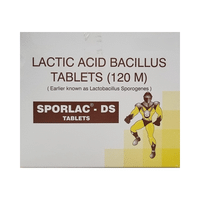 Sporlac DS Tablet | For Stomach Care₹ 224.16
 Gelusil MPS Antacid & Antigas Original Liquid | For Acidity, Hurtburns, Gas & Stomach Care | Sugar-Free | Mint Flavour Mint₹ 173.52
 KZ Soap | Fights Fungal Skin Infections₹ 176.1
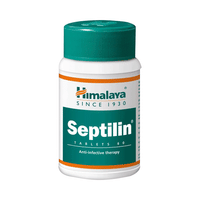 Himalaya Septilin Tablet | for Treatment and Management of Various Infections | Prevents Recurrence of Infections₹ 275
 Digene Antacid Antigas Gel | For Acidity, Gas, Heartburn & Stomach Care | Flavour Mint₹ 180.7
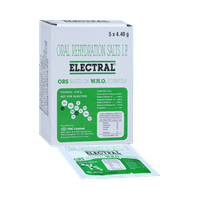 Electral Powder | ORS for Replenishing Body Fluids & Electrolytes | For Stomach Care₹ 4.65
 Dermadew Aloe Cream₹ 190
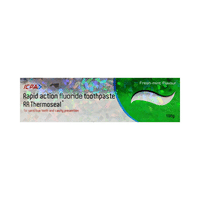 RA Thermoseal Rapid Action Fluoride Toothpaste | For Sensitive Teeth & Cavity | Flavour Fresh Mint₹ 144.07
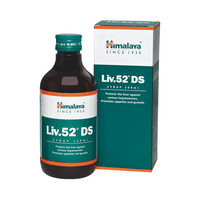 Himalaya Liv.52 DS Syrup | Protect the Liver | Enhance Liver Functions | Supports Liver Health₹ 351
Expert advice FOR Cefaprime Tablet
- Your doctor has prescribed Cefuroxime to cure your infection and improve your symptoms.
- Do not skip any doses and finish the full course of treatment even if you feel better. Stopping it early may make the infection come back and harder to treat.
- Consider taking it with food to avoid an upset stomach.
- Diarrhea may occur as a side effect, but it should stop when your course is complete. Inform your doctor if it does not stop or if you find blood in your stools.
- Discontinue Cefuroxime and inform your doctor immediately if you get a rash, itchy skin, swelling of the face and mouth, or have difficulty breathing.
Frequently asked questions FOR Cefaprime 250mg Tablet
Cefuroxime
Q. How long does Cefaprime 250 Tablet take to work?
The amount of time Cefaprime 250 Tablet takes to work depends on the type of infection and response of the patient to the medicine. The antibiotic may start working after you take it but for maximum effect it may require some time. Usually, the symptoms of bacterial infections start to decrease in 48 to 72 hours after starting the medication.
Q. How long should you take Cefaprime 250 Tablet?
The duration of therapy with Cefaprime 250 Tablet depends upon the type of infection. It is usually given for 7 days. It ranges from 5 to 10 days and depends on the response of the infection in the patient. Before starting the medication consult a doctor who will prescribe the exact duration of therapy and follow the instructions as given.
Q. Can Cefaprime 250 Tablet be taken on an empty stomach?
No, Cefaprime 250 Tablet should not be taken on an empty stomach like other antibiotics of its class. It should be taken twice daily after a meal. Taking Cefaprime 250 Tablet with food increases the absorption rate of the drug. This further enhances the effectiveness of the medicine to treat the infection.